Complete Practical Guide to Raising a Caucasian Shepherd Puppy from 4 to 8 Months

Updated: Sep 22
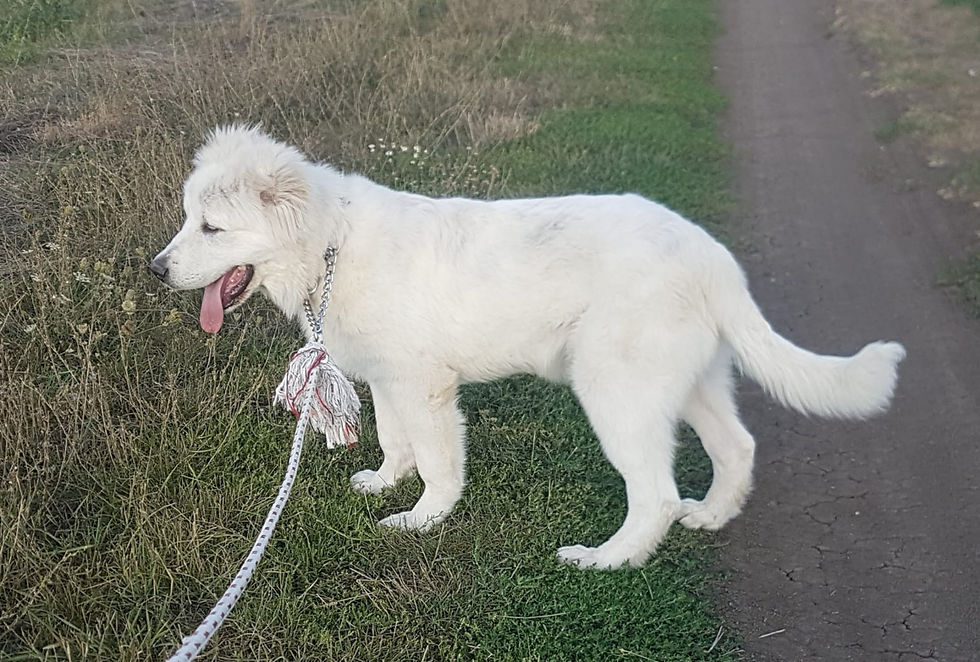
Introduction: A Big Body, but Still a Young Dog
The period between 4 and 8 months is one of the most dynamic stages in the development of a Caucasian Shepherd.
In just a few months, the small fluffy puppy begins to turn into a physically powerful young dog. Its weight and strength increase much faster than its mental maturity. This is exactly why this stage requires so much attention from the owner.
The Caucasian Shepherd is an independent, self-confident and naturally protective breed. It was developed to observe, assess situations and, when necessary, make decisions independently.
For this reason, the goal of training is not to make the dog more aggressive or ‘more dominant’.
The goal is to raise a healthy, confident, calm and manageable dog that retains its natural guarding instinct, while learning to trust the owner and control its reactions.
1. Feeding, Growth and Weight Control
In large and giant breeds, faster growth does not mean better growth. One of the most common mistakes is trying to make the puppy become huge as quickly as possible. A Caucasian Shepherd should reach its genetically determined adult size gradually.
What food should you use?
If feeding commercial dry food, choose a complete diet formulated for growing large or giant breed puppies.
These foods are designed to provide the necessary nutrients without encouraging excessively rapid growth.
The food should be complete and balanced for growth.
It should be suitable for large or giant breeds.
It should contain properly balanced minerals.
It should be fed in an amount appropriate for the individual puppy.
If feeding a homemade or raw diet, it must be properly balanced, not simply high in meat. Calcium, phosphorus, vitamin D, energy and other essential nutrients must be supplied in the correct proportions.
How much should you feed?
There is no universal rule such as ‘600 grams at 5 months’. Different foods have different calorie densities, and different puppies have different metabolisms and growth rates.
Use the manufacturer’s feeding guide as a starting point and monitor the puppy’s body condition. The thick coat of a Caucasian Shepherd can be misleading, so do not rely on appearance alone.
The ribs should be relatively easy to feel, and the puppy should have a visible waist when viewed from above. A growing puppy is generally better kept slightly lean than too heavy.
Calcium and other supplements
Do not add calcium, bone meal, vitamin D or mineral supplements marketed ‘for strong bones’ without veterinary advice.
If the puppy is eating a properly balanced complete food for growth, extra calcium may interfere with normal skeletal development. Calcium itself is essential. The problem is excess, not calcium itself.
How many meals?
Between 4 and 8 months, most puppies gradually move toward 2–3 meals per day. There is no need to change the number of meals on one exact date. Measured meals are generally preferable to leaving food available all day. Fresh water should always be available.
2. Bone and Joint Development
At this age, the puppy is growing very quickly, but the skeleton is still developing. The growth areas of the bones are more vulnerable than the bones of an adult dog.
This does not mean the puppy should be protected from all movement. Quite the opposite. Movement is necessary for muscle development, coordination, balance, healthy physical development and mental wellbeing. The problem is excessive and forced exercise.
3. Appropriate Exercise Between 4 and 8 Months
Suitable activities include calm walks, free play at the puppy’s own pace, movement on grass, soil and varied natural surfaces, sniffing and exploring, short play sessions and swimming if the puppy enjoys water and the location is safe.
When puppies are moving freely, they can stop, sit or lie down when they become tired. This is very different from forced exercise where they must keep up with a person.
What should be avoided?
Prolonged running beside a person.
Running beside a bicycle or scooter.
Repeated high jumps.
Intensive sports training.
Weight pulling.
Prolonged forced exercise.
Repeatedly running up and down long staircases.
Stairs are not completely forbidden. There is a big difference between calmly walking over a few steps and repeatedly running up and down several floors. The same applies to asphalt. Brief walking on a hard surface is not the problem; prolonged forced running on it should be avoided.
Slippery floors
If the home has very slippery laminate or tiled floors, it is sensible to use non-slip runners or mats in areas where the puppy often plays, runs and turns.
What about the ‘5 minutes per month of age’ rule?
We do not treat this as a law. There is no universal formula stating that every six-month-old puppy should exercise for exactly the same number of minutes. One dog may spend 30 minutes calmly walking and sniffing, while another may spend 10 minutes sprinting, jumping and making sharp turns.
The type and intensity of exercise matter more than the stopwatch.
4. Socialisation: Not Loving Everyone, but Being Calm Around the World
This is especially important with the Caucasian Shepherd. Socialisation does not mean that every person should pet the puppy. It also does not mean the puppy must play with every dog it meets. The goal is neutrality.
The dog should gradually learn that the world contains men, women, children, people wearing hats or carrying umbrellas, bicycles, cars, buses, different noises, different surfaces, animals, veterinary clinics and unfamiliar places — and that it does not need to react to everything.
A very good goal for a Caucasian Shepherd is: ‘I saw it. I noticed it. There is no reason for me to do anything.’
Do not force contact
If the puppy prefers to observe a stranger from several metres away, there is no need to pull it closer so the person can pet it. Reward calm behaviour.
Children
A dog and a young child should never be left together unsupervised. Children should be taught not to pull the ears or tail, not to hug the dog by force, not to disturb it while sleeping, not to interfere with its food bowl and not to take toys away from it.
Even a completely calm young dog can accidentally knock over a small child simply because of its size.
Other dogs
Choose calm, socially stable dogs. One good interaction is worth more than ten chaotic ones. Dog parks full of unfamiliar dogs with very different temperaments are not an essential part of socialisation.
5. How Character Changes Between 4 and 8 Months
During this period, many puppies begin to become more independent, more aware of their surroundings, more persistent, more willing to test rules, more reserved with some strangers and more interested in gates and territorial boundaries.
Sometimes owners feel that the dog has ‘forgotten’ a command it already knew. Very often the dog knows the command perfectly well. It is simply beginning to decide whether it is worth doing.
This is the time to be consistent, not to begin a physical struggle with the dog.
6. When Do Guarding and Territorial Instincts Begin?
There is no single exact age. In one puppy, the first signs may appear relatively early. In another, much later.
Barking at unusual sounds.
Increased attention to the gate.
Watching people passing the property.
Standing between the owner and a stranger.
Prolonged staring.
Reluctance to make close contact with unfamiliar people.
This does not automatically mean aggression. The Caucasian Shepherd is a natural guardian. The owner does not need to create this instinct.
7. How to Respond to the First Signs of Guarding
If the puppy barks, do not automatically punish it. It may simply be saying: ‘I noticed something.’
Calmly check the situation. Then call the puppy back and use a familiar command such as ‘Come’, ‘Place’, ‘Inside’ or ‘Enough’. Reward the dog when it disengages and calms down.
Do not reward the barking itself with enthusiastic praise such as ‘Good! Guard!’. With a young dog, this can easily become a lesson: ‘I bark at everything = my owner is pleased.’
If the dog spends hours running and barking along the fence, limit the opportunity to rehearse this behaviour constantly. Use visual barriers if necessary.
Do not organise ‘tests’
Do not ask a friend to pretend to attack you just to see how the puppy reacts. Do not encourage fear or aggressive behaviour at this age. The natural guarding instinct will develop on its own. Our job is to develop control over it.
8. Training and Boundaries
Positive training does not mean allowing the dog to do whatever it wants. A Caucasian Shepherd needs clear and consistent rules.
But authority is not built through hitting, kicking, pinning the dog down, rolling it onto its back, pulling ears or fur, shouting or physically proving ‘who is stronger’.
With an adult Caucasian Shepherd, a physical struggle is pointless anyway. The owner should be calm, consistent and predictable.
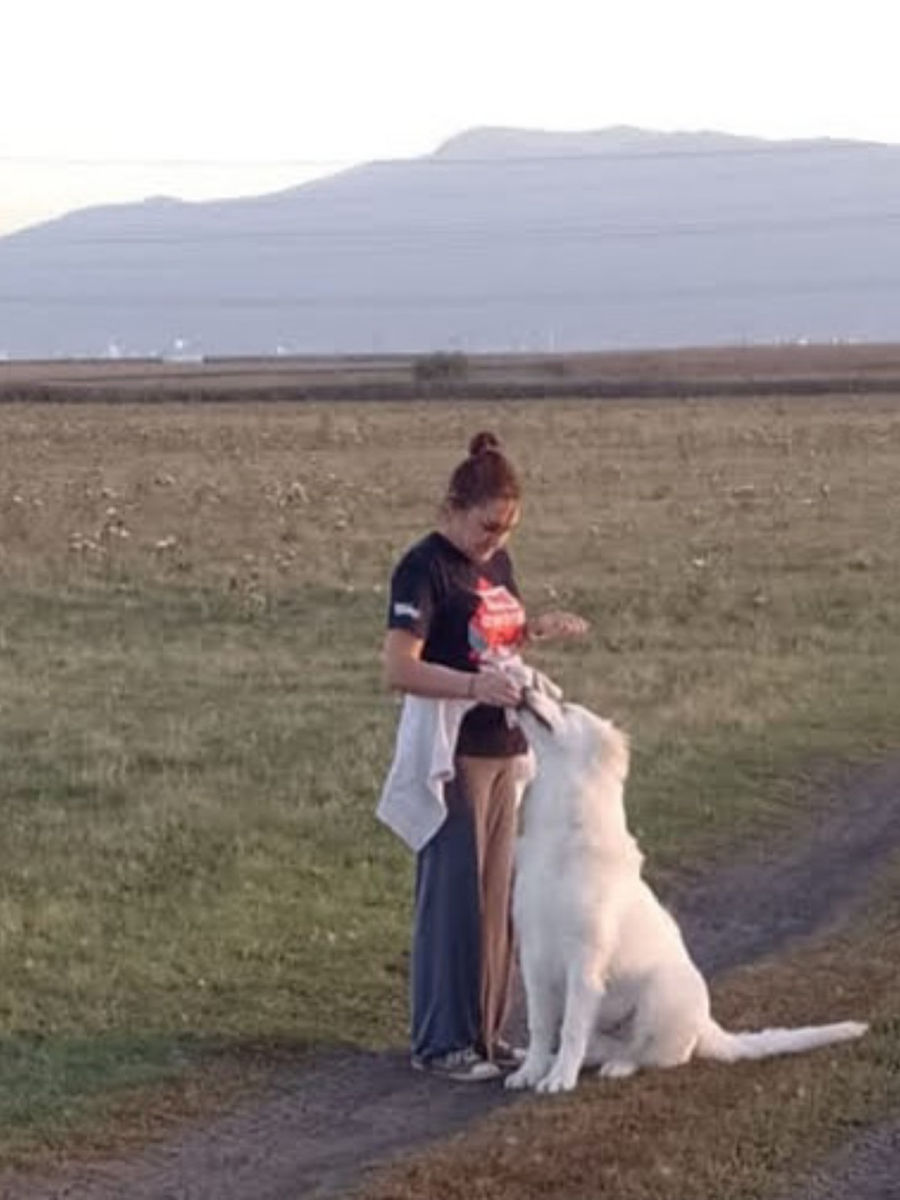
The most important commands
Come
Leave it
Drop it
Wait
Place
Sit
Down
Enough / Quiet
The dog does not need to know dozens of commands. It is better to have a few important commands that are reliable.
Family rules must be consistent
If one person forbids jumping on visitors while another encourages it, the puppy cannot understand the rule. Everyone should follow the same rules.
9. Walking on Lead
This is the age when lead training needs to become a serious part of daily life. Within a few more months, the dog will be much stronger.
When the lead is loose, continue walking and reward calm movement. If the dog begins pulling constantly, stop or change direction. Over time, the dog learns: pulling does not get me where I want to go faster.
The dog does not need to walk half a step behind the owner at all times. It may sniff and walk slightly ahead. The goal is a loose lead, attention to the owner and the ability to remain under control — not a military parade.
10. Muzzle Training
This is a skill we particularly recommend for a large and powerful dog. A muzzle does not mean: ‘This dog is aggressive.’ A properly trained dog accepts the muzzle as a normal part of life.
Use a well-fitting basket muzzle that allows the dog to breathe freely, pant, drink and take treats. Training should be gradual and positive. Do not wait until the dog is frightened, injured or needs an emergency examination before putting on a muzzle for the first time.
11. Teething, Mouthing and Chewing
Between approximately 4 and 7 months, the puppy is actively changing from baby teeth to adult teeth. This creates a natural need to chew.
Provide safe chew toys of an appropriate size. Avoid extremely hard items that may fracture young permanent teeth.
If the puppy starts biting hands or clothing during play, stop the game briefly, remove attention and offer an appropriate toy instead. Do not teach the puppy that human hands are toys.
12. Resource Guarding – Food, Toys and Objects
Prevention is much better than confrontation.
Food
Do not take the puppy’s bowl away while it is eating simply to ‘teach it who is in charge’. This may teach the puppy that an approaching person means losing its food.
A better approach is occasionally to walk past and add something even better to the bowl. This teaches: person approaching = something good is coming.
Toys and objects
Teach ‘Drop it’ through trading. Offer something more valuable, the dog releases the object and receives the reward. If the object is safe, you can sometimes give it back.
If there is already a problem
Stiffening over the bowl.
Staring.
Growling.
Snapping.
Attempting to bite.
Do not punish the dog and do not repeatedly ‘test’ it. Seek help from a professional experienced with large, independent guardian breeds.
13. Grooming and Body Handling
An adult Caucasian Shepherd is a very large dog with a thick double coat. Everything you want to be able to do calmly in two years should become normal now.
Brushing.
Touching the paws.
Checking the nails.
Examining the ears.
Opening the mouth.
Lifting the lips.
Touching the abdomen.
Touching the tail.
Keep handling brief: touch → calm behaviour → reward → finish. Do not wait until the first painful ear, paw or dental problem to discover that the dog has never learned to tolerate handling.
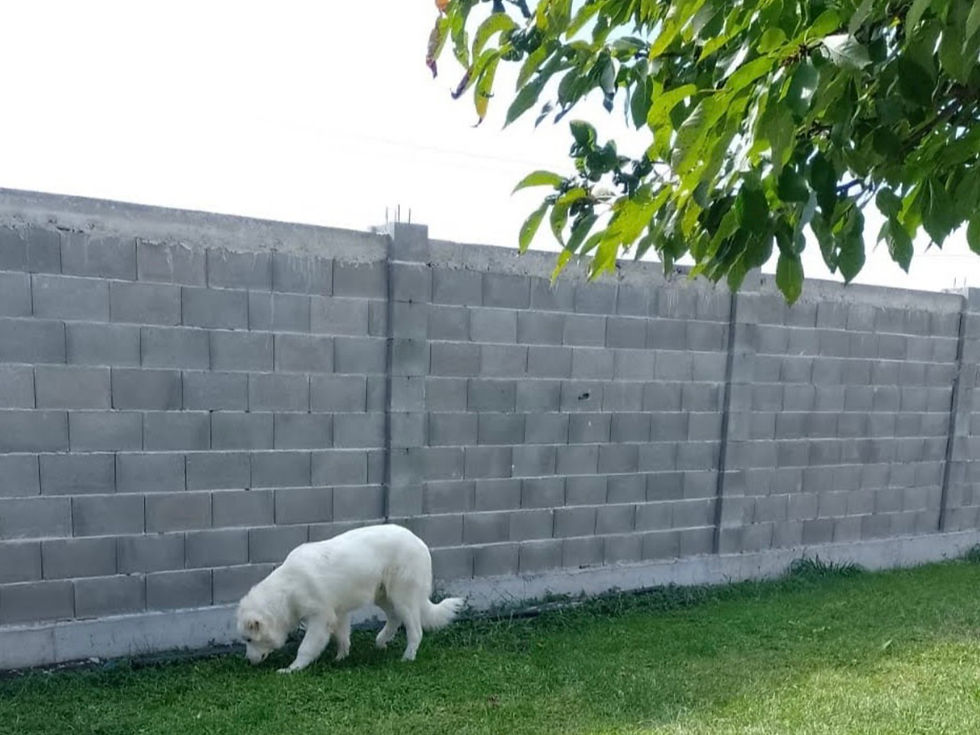
14. Living in a Garden or Yard
The Caucasian Shepherd is very well suited to spending a great deal of time outdoors. But a garden does not replace socialisation, walks, training or contact with the family.
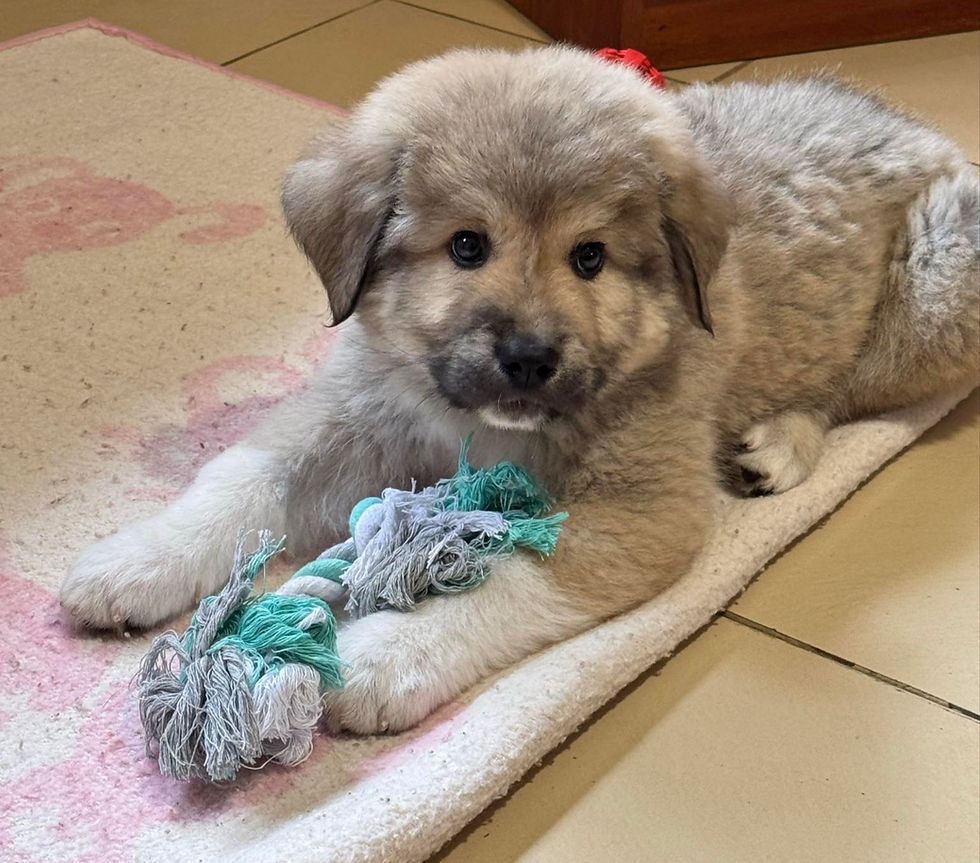
A secure fence is essential. The small fluffy puppy will grow into an extremely powerful dog.
Constant access to fresh water.
Shade.
A dry shelter.
Protection from extreme weather.
A secure environment.
There is no universal table saying ‘At 4 months the puppy can stay alone for two hours, at 7 months for four.’ This depends on the individual dog, weather, environment and lifestyle. Outdoor time should be increased gradually.
15. Why the Dog Should Not Live Permanently on a Chain
Permanent tethering restricts natural movement and prevents the dog from creating distance from things it finds stressful.
Frustration.
Reactivity.
Excessive territorial behaviour.
Behavioural problems.
A chain is not a substitute for a secure fence. For a Caucasian Shepherd, the appropriate solution is a secure territory with freedom to move, not life at the end of a few metres of chain.
16. Living in an Apartment
It is possible, but it requires more organisation. The Caucasian Shepherd is not a hyperactive breed that needs to run all day.
Regular calm walks.
Opportunities to sniff and observe.
Mental stimulation.
Clear rules.
A quiet place of its own.
A consistent routine.
Household rules should be decided while the dog is still young. If you do not want a huge adult dog on the sofa, there is not much sense in teaching the puppy for the first eight months that the sofa belongs to it.
17. Sleep and Rest
Puppies need a lot of sleep and rest. We do not use an exact table showing how many hours a puppy ‘must’ sleep at each month of age. Needs vary between individuals.
Provide a quiet place where the puppy can sleep without being disturbed.
More mouthy.
More irritable.
More overexcited.
Less able to concentrate.
Sometimes the solution to ‘He has too much energy’ is actually: he needs some sleep.
18. Vaccinations
The vaccination schedule should take into account vaccines already given, the vaccine product being used, the country, local disease risks and the advice of the veterinarian.
For this reason, we do not use a universal internet schedule such as ‘At this month, give this vaccine.’ Keep the puppy’s passport up to date and follow its individual vaccination programme.
19. Parasite Protection – Our Routine at Seveguard
At Seveguard, we use NexGard Spectra once every month throughout the entire year, including winter. We do not stop parasite prevention seasonally.
The tablet is always selected according to the dog’s current body weight, which is especially important between 4 and 8 months because a Caucasian Shepherd puppy may move quickly from one weight range to the next.
NexGard Spectra provides protection against certain external and internal parasites according to the product indications. With a rapidly growing puppy, always check the current weight before giving the next dose. If a different product is used, the schedule should follow that product’s instructions and veterinary advice.
20. What Should Definitely Be Avoided Between 4 and 8 Months
Overfeeding.
Trying to achieve maximum growth as quickly as possible.
Adding calcium or minerals without a reason.
Prolonged forced running.
Repeated high jumps.
Heavy physical work.
Deliberately provoking guarding aggression.
Physical punishment.
Alpha rolls and force-based methods.
Permanent tethering.
Isolation from people and the outside world.
Chaotic encounters with unfamiliar dogs.
Forcing interaction with strangers.
Taking the food bowl away ‘to show who is boss’.
Allowing the puppy to practise fence barking for hours every day.
21. The Most Common Mistakes Owners Make
1. ‘He is still only a puppy.’
Mentally — yes. Physically, the dog may already be strong enough to knock a person over. Good habits need to be built now.
2. Overfeeding
‘I want him to become huge.’ Adult size is primarily determined by genetics. Extra food adds fat and unnecessary strain, not better genetics.
3. Poor socialisation
‘He is a guard dog, so he should not get used to people.’ The opposite is true. A good guardian should be able to distinguish between a normal situation and a genuine threat.
4. Encouraging every bark
Not every movement behind the fence requires a full alarm response.
5. Physical confrontation
With an independent and very powerful dog, this is an especially poor strategy.
6. Inconsistent rules
Today: ‘No.’ Tomorrow: ‘Okay.’ That does not teach rules. It teaches the dog to keep trying until it succeeds.
7. Too much physical exercise
A puppy should not be trained like an adult athlete.
8. Too little movement and stimulation
The opposite extreme is also unhealthy.
9. Ignoring resource guarding
Growling is not solved by: ‘I’ll show him!’
10. Allowing the puppy to manage the territory too early
A young dog does not yet have the mature judgement of an adult guardian.
10 Most Important Things an Owner Should Do Between 4 and 8 Months
Keep the puppy lean. Do not chase maximum body weight or rapid growth.
Feed a properly balanced growth diet. Do not add calcium or minerals without professional advice.
Provide movement without forcing exercise. Free play, walks and exploring are more appropriate than intensive sports.
Continue socialisation. The goal is calm, confident behaviour around the world — not loving every person.
Build reliable basic commands. Especially Come, Leave it, Drop it, Wait and Place.
Teach loose-lead walking. Do it now, before the dog becomes much stronger.
Do not try to artificially create a guardian. The guarding instinct is already in the genetics. Work on control.
Build trust around food and possessions. Add value and trade rather than taking things by force.
Accustom the puppy to handling and a muzzle. Paws, ears, mouth, grooming and veterinary procedures should become normal.
Be calm and consistent. A Caucasian Shepherd needs clear rules, not fear.
Conclusion
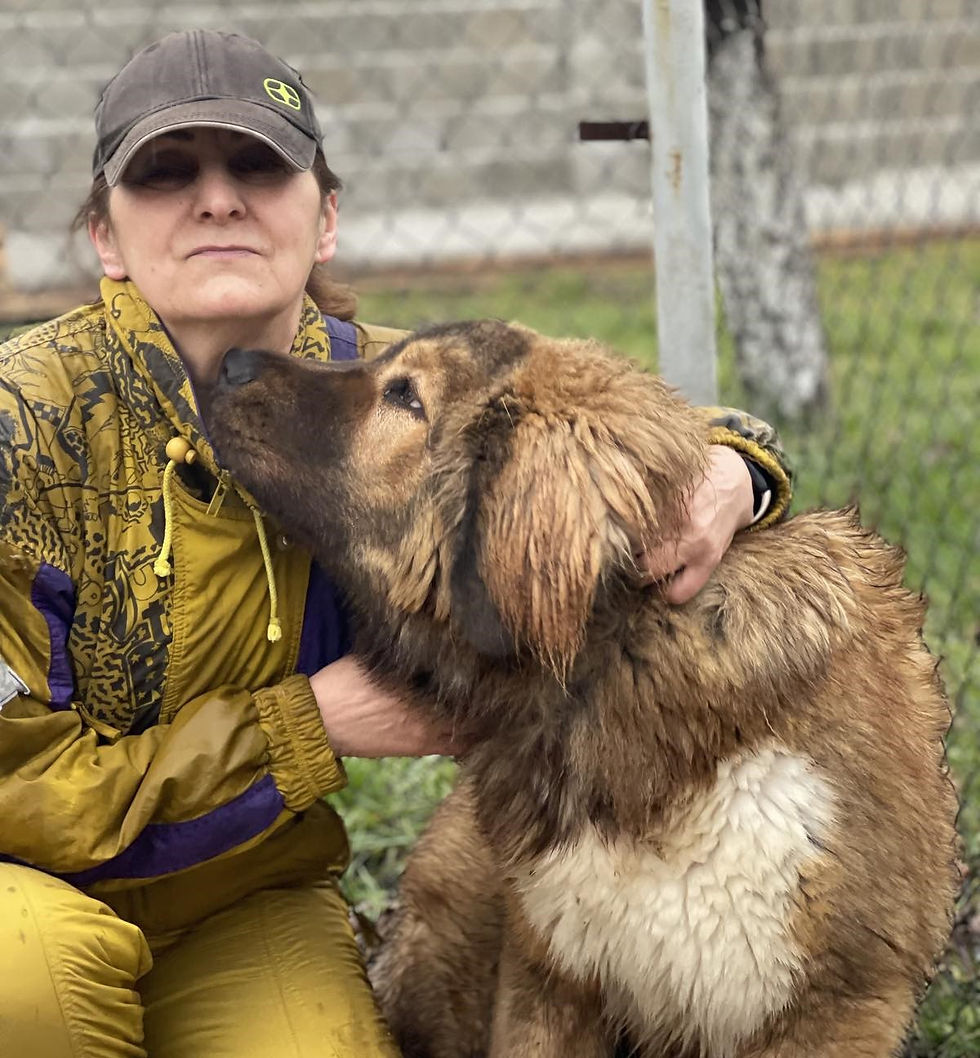
Between 4 and 8 months, a Caucasian Shepherd may already look impressively large and powerful. But mentally, it is still a young dog learning about the world.
Do not try during this stage to make the dog bigger, more aggressive or ‘more dominant’. Instead, develop a healthy body, a stable temperament, trust in the owner, calmness around the world and clear boundaries.
The natural guarding instinct will continue to develop with age. The owner’s most important job is to make sure that, together with that instinct, the dog also develops good judgement and self-control.
Main Sources Used for This Guide
FCI Standard No. 328 – Caucasian Shepherd Dog
American Veterinary Society of Animal Behavior (AVSAB)
WSAVA – Global Vaccination Guidelines
VCA Animal Hospitals – Large & Giant Breed Puppy Nutrition and Exercise
FEDIAF – Nutritional Guidelines for Complete and Complementary Pet Food
ESCCAP – Parasite Control Guidelines
Official NexGard Spectra product information
Comments