How to Raise a Caucasian Shepherd from 8 to 12 Months

Updated: Sep 22
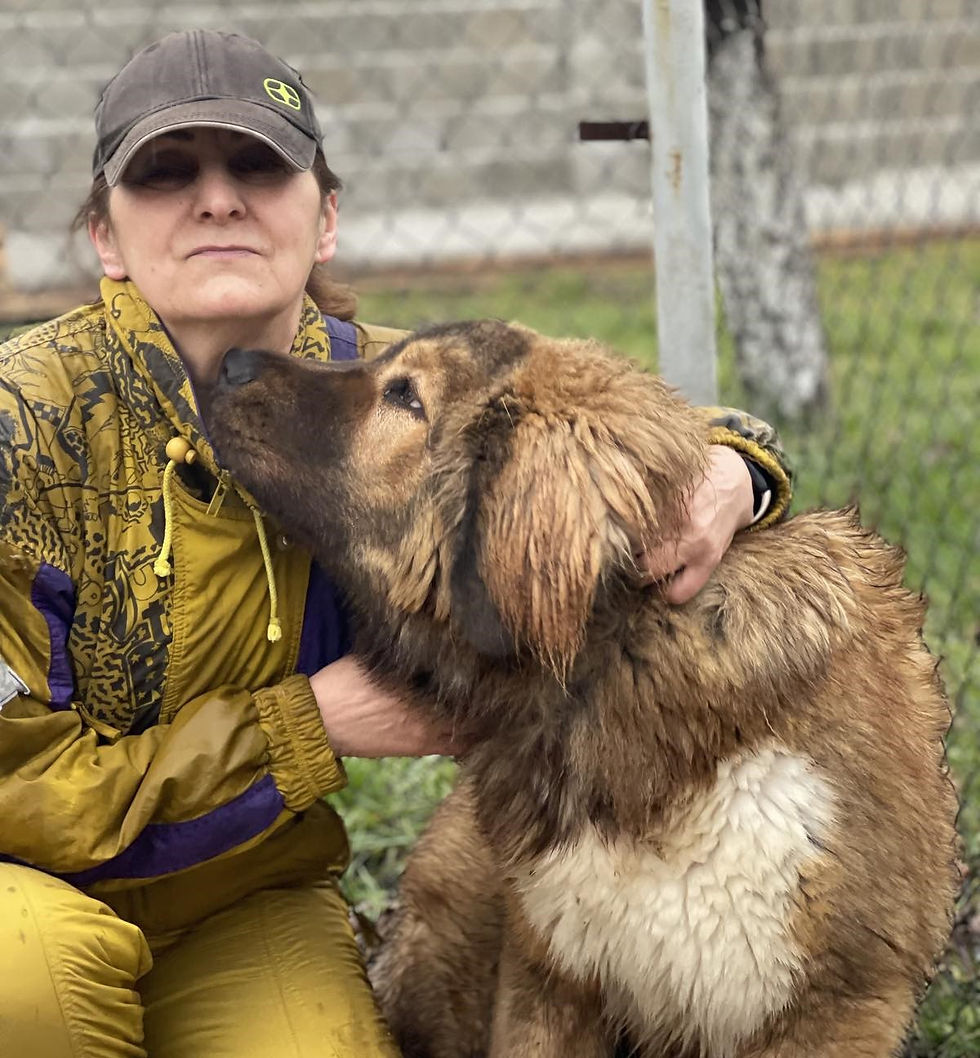
The Young Giant
Between 8 and 12 months of age, the Caucasian Shepherd enters one of the most interesting — and at the same time most challenging — stages of development.
From the outside, the dog may already look almost fully grown. It is large, powerful, and physically capable of much more than it was only a few months ago. But appearances can be misleading. The skeleton is still developing, muscles and body proportions continue to change, and mental maturity still lags far behind physical size.
In simple terms: a big body, but still a young mind.
In large and giant breeds, there is no single exact date when growth suddenly ends. Different parts of the skeleton mature at different times, and overall physical development may continue well beyond the first year. For this reason, a 12-month-old Caucasian Shepherd should not yet be treated as a fully mature adult dog.
Growth continues — do not chase kilograms
One of the most common mistakes when raising a Caucasian Shepherd is trying to make the dog become “as big as possible” as quickly as possible.
There is no reliable universal chart stating that a Caucasian Shepherd must weigh an exact number of kilograms at 8, 10, or 12 months. Sex, genetics, bloodline, height, bone structure, and individual development can create enormous differences between two perfectly healthy dogs of the same age.
What matters much more is body condition. On the nine-point body condition scale, an ideal condition for most dogs is around 4–5/9: the ribs should be easy to feel without a thick layer of fat, a waist should be visible from above, and the abdomen should have a slight tuck when viewed from the side. With the thick coat of a Caucasian Shepherd, your hands are often more reliable than your eyes.
A growing Caucasian Shepherd should be lean and well-muscled, not heavy and rounded. Genetics will determine the dog's eventual size. Overfeeding will not create a better dog — it will only place additional stress on the developing skeleton.
Hip dysplasia is a multifactorial condition in which genetics play a major role, but excessive calorie intake, rapid weight gain, and excess body weight can worsen its development and expression. Maintaining a healthy body condition is one of the most important factors an owner can actually control.
Feeding between 8 and 12 months
At this age, the Caucasian Shepherd is still growing. The diet should be complete and balanced for growth and appropriate for dogs expected to reach a large adult size.
It is not enough for the bag simply to say “puppy.” What matters is that the food is genuinely formulated for the growth of large-breed dogs.
For dogs between 6 and 12 months, two measured meals per day are a common practical routine. The amount should not be determined only by the feeding chart on the package. Watch the condition and growth of the individual dog and adjust the portion when necessary. Slow, controlled growth is preferable to forced rapid growth.
Calcium, phosphorus, and supplements
If the dog is receiving a complete and balanced large-breed growth diet, do not add calcium, phosphorus, or vitamin D on your own.
In growing large dogs, both deficiency and excessive mineral intake can interfere with normal skeletal development. Adding supplements on top of an already balanced diet is rarely necessary and may be harmful.
That means no calcium powder, crushed eggshells, bone meal, or “bone-strengthening” supplements unless a veterinarian or veterinary nutritionist has identified a specific reason.
With homemade or raw diets, the issue becomes even more important. Feeding meat, organs, and bones “by eye” does not guarantee nutritional balance in a growing giant-breed dog. Such diets should be professionally formulated.
Treats are food too. A useful guideline is to keep treats to no more than around 10% of the dog's total daily calorie intake. Part of the dog's normal food allowance can easily be used as training rewards.
Joints and bones — protect them without raising the dog under a glass dome
A Caucasian Shepherd needs movement. Restricting all physical activity is not the answer. The goal during this period is regular, gradual, varied movement without prolonged forced exercise.
Suitable activities include relaxed walks, sniffing, movement on grass and natural ground, free movement in a safe area, short play sessions, and moderate inclines. It is also useful for the dog to learn to move calmly across different safe surfaces and develop coordination.
This is not the right time for prolonged jogging with a person, running beside a bicycle, repeated jumping, long high-intensity hikes, constant sharp stops and turns after a ball, or systematic exercise at the level expected from a mature sporting dog.
There is no scientifically established formula of “five minutes of exercise per month of age.” Exercise duration should be adjusted to the individual dog, terrain, temperature, body condition, and how well the dog recovers afterward.
Stairs are not a forbidden object either. Calmly walking up a few steps is not the same as repeatedly racing up and down them. Control, good footing, and avoiding jumping over steps are more important. Slippery floors at home also deserve attention. For a large young dog, rugs or runners in places where the dog frequently starts, stops, or turns can help reduce slipping.
If you notice limping, reluctance to move, stiffness, pain when getting up, or changes in gait, do not wait for the dog to “grow out of it.” Orthopaedic problems can show signs while the dog is still young.
Adolescence: when the familiar puppy suddenly develops opinions
At this age, many owners say: “Yesterday he came immediately. Today he looks at me and decides whether it is worth it.” This does not necessarily mean the dog is trying to “become the boss.”
Adolescence brings greater independence, stronger interest in the environment, and changes in motivation. In the Caucasian Shepherd, independence is not a fault — it is part of the breed's character. The breed is naturally confident, self-assured, independent, and strongly oriented toward guarding.
That means training now needs to become smarter, not harsher. If a command stops working around strong distractions, do not repeat it ten times and then punish the dog. Reduce the difficulty, use a long line, improve the reward, and gradually rebuild the behaviour in more challenging environments.
What is important to practise
By the first birthday, a Caucasian Shepherd does not need thirty circus tricks. Far more valuable are a reliable response to the dog's name, attention to the owner, calm walking on a leash, recall in controlled situations, sit, down, stay, leave it, drop it, waiting at doors, calmly ending play, settling on a designated place, allowing calm handling of ears, paws, mouth and body, and gradual positive muzzle training.
Muzzle training is useful even for a dog that has never shown aggression. With a giant breed, calm familiarity with a properly fitted muzzle can be extremely valuable during veterinary procedures, pain, transport, emergencies, or where local regulations require one.
Self-control matters more than the number of commands
For the Caucasian Shepherd, this is one of the most important goals of the entire period. The dog should gradually learn that not every movement behind the fence requires action, not every person needs investigating, and not every dog in the distance requires a reaction.
Reward not only obedience to commands, but also spontaneous calm behaviour. The dog lies quietly and watches a person passing by — reward. It hears a noise and looks at the owner instead of rushing toward the fence — reward. It stops playing and comes back to you — reward.
This builds a future guardian far more effectively than encouraging barking and aggression. Training should be reward-based, clear, and consistent. Avoid physical punishment, intimidation, “alpha” techniques, and confrontational handling. Increase management, not punishment.
Socialisation now means neutrality
For a small puppy, socialisation means: “The world is safe and interesting.” For an adolescent, the goal gradually becomes: “I can see the world without reacting to everything in it.”
This is especially important in a naturally reserved guardian breed. A Caucasian Shepherd does not need to love every stranger, allow everyone to touch it, or play with every dog it meets. A far more valuable goal is calm neutrality.
A person walks past — the dog notices and continues. Another dog is on the other side of the street — your dog may observe it without lunging. A bicycle, car, umbrella, or noisy trolley appears — the dog notices the stimulus but remains manageable.
Do not force strangers to pet the dog. Do not drag the dog toward something that worries it. Work at a distance where the dog can still think, respond, and accept a reward.
The guarding instinct may become more visible
During this period, many Caucasian Shepherds begin paying more attention to the gate, fence, sounds around the home, and people approaching the property. This does not mean that the “guard switch” turns on at a particular age. Development is individual.
The breed was developed for guarding, and natural independence and protective awareness are part of its character. Our job is therefore not to teach a young Caucasian Shepherd to become suspicious. The breed already has enough genetic foundation for that. Teach the dog what to do with that suspicion.
It may alert to something unusual, but it should also be able to stop, disengage, and be redirected. The owner decides who enters the property and how the situation is handled. We are not looking for maximum aggression. We are looking for maximum stability.
Visitors at home
Do not allow a young Caucasian Shepherd to decide by itself how visitors should be received at the front door. If you are not yet fully confident in the dog's response, use a leash, barrier, crate, or separate room. The visitor should enter calmly and initially ignore the dog — no leaning over it, hugging, staring, or insisting on physical contact.
Reward calm behaviour. Not every dog needs physical interaction with every guest. In some cases, calm coexistence at a comfortable distance is perfectly acceptable.
Children
A giant dog and a small child should never be left together without responsible adult supervision. Children should not ride the dog, chase it, pull it, wake it, hug it by force, or take food and objects from its mouth.
This rule does not mean the Caucasian Shepherd is “bad with children.” It means that even a kind and patient dog with enormous physical strength deserves clear boundaries and safe management.
Other dogs and animals
As social and sexual maturity develops, a dog's attitude toward other dogs may change. Do not make the goal: “My dog must love every other dog.” The goal is for the dog to pass others calmly, remain manageable, and have carefully selected social contacts.
Chaotic dog parks are not always a good choice for a giant adolescent dog. With cats, household animals, and livestock, management should be individual. The breed's traditional role as a livestock guardian does not automatically guarantee safe behaviour with every animal. Do not allow chasing to become a habit.
Should protection training begin now?
Between 8 and 12 months, the priorities should be: control → self-control → neutrality → stability → a reliable relationship with the owner.
Owners should not provoke the dog into attacking, organise amateur “courage tests,” encourage lunging at people, or teach the young dog that strangers are enemies.
There is no single scientifically established age at which all forms of specialised protection work suddenly become appropriate. If such training is ever considered, it should depend on the health, maturity, temperament, and stability of the individual dog and should only be conducted by a qualified professional. For a family Caucasian Shepherd, there is usually no need to “wake up” the guardian instinct. It is far more important to be able to control it.
Puberty and the first heat
In females, the first heat may occur during this period, but in large and giant breeds it may also appear considerably later. Some females may not experience their first heat until 18–24 months of age.
During heat, the female should be walked under control and kept away from intact males. Even a secure garden should not be treated as an absolute guarantee. In males, marking, interest in females in heat, and attempts to wander may become more noticeable.
Being physically capable of reproduction does not mean that a dog is physically or mentally mature.
Being in heat does not mean being ready for breeding
Breeding regulations differ between countries, national kennel organisations, and breed clubs. Every breeder is responsible for following the rules under which their litters are registered.
For NKKO – Bulgaria, the current minimum breeding age is 18 months for a female at the date of mating and 15 months for a male. If a dog is used for breeding below the required age, pedigrees are not issued for the offspring.
This is a minimum permitted age, not a recommendation to breed the dog as soon as it becomes eligible. At Seveguard, we do not rush breeding. Our practice is for a female to be at least two years old and sufficiently physically and mentally mature before breeding is even considered.
Coat, teeth, ears, and nails
The double coat requires regular brushing, especially during seasonal shedding. Pay particular attention behind the ears, around the neck, under the front legs, on the hindquarters, and around the tail, where tangles and mats can form more easily.
A healthy dog does not need frequent bathing, and the double coat should not be routinely shaved. By this age, the permanent teeth are normally present. Check for retained baby teeth, fractures, inflammation, or unpleasant odour. A powerful jaw does not make teeth unbreakable — avoid excessively hard chews.
Check the ears for redness, discharge, unpleasant smell, or pain. A healthy ear does not need constant “preventive cleaning.” Nails should be maintained according to their length and natural wear. If long nails begin to alter the way the paw contacts the ground, they are already too long.
Vaccination and parasite prevention
There is no universal rule that every vaccine must be given every year. Vaccination schedules should consider the dog's previous vaccines, the product used, age, lifestyle, individual risk, local disease exposure, and legal requirements.
Core vaccines may follow multi-year intervals once adequate immunity has been established, while rabies vaccination must follow local law and the licensed product schedule. Other vaccines may have different intervals depending on risk.
The same principle applies to parasite control. A sensible prevention plan should reflect the dog's actual lifestyle: where it lives, whether it travels, hunts, eats raw meat, has access to rodents or livestock, and which parasites are common in the region.
When to contact a veterinarian
Do not wait if the dog develops repeated or persistent limping, pain when getting up, reluctance to move, unusual gait, swollen joints, or a sudden change in physical activity.
Orthopaedic imaging should not be delayed simply because the dog is “not old enough for official X-rays yet.” Official health certification and diagnostic imaging because of symptoms are two different things.
A particularly urgent warning sign in a large dog is abdominal swelling, severe restlessness, and repeated unproductive attempts to vomit. This may indicate gastric dilatation-volvulus and requires immediate veterinary treatment.
A sudden change in behaviour can also have a medical cause. A dog that suddenly resists touch, becomes irritable, or begins growling without a previous history should also be evaluated for pain.
Do not punish growling
Growling is a warning. It says: “I am uncomfortable with this. Please stop.” If we punish the warning itself, the cause of the discomfort does not disappear. We may simply create a dog that gives less warning next time.
If there is resource guarding, aggressive behaviour toward family members, serious fear, or behaviour the owner can no longer manage safely, seek qualified professional help early rather than waiting for the dog to “grow out of it.”
An example of a normal day
This is not a timetable that every Caucasian Shepherd must follow. Morning — toilet break, calm walk with time for sniffing, and a few short training exercises. Then breakfast and rest.
During the day — free movement in a safe environment, rest, a short mental exercise, or food-searching activity. Later — another walk that may include leash work, recall practice, and calm exposure to people and dogs.
Evening — second meal, quiet time with the family, and a final short outing. Do not constantly try to “wear out” a young dog. Rest is part of development too.
What do we want by one year of age?
Not a perfectly trained Caucasian Shepherd. We want a young dog that can be handled safely on a leash; returns its attention to the owner; understands basic cues; can give up an object; allows basic examination and grooming; knows how to settle; can observe people and dogs without automatically reacting; understands household rules; and, most importantly, trusts that the owner is in control of the situation.
At 12 months, the work is not finished. In the Caucasian Shepherd, the true adult character is only beginning to take shape.
The most important thing between 8 and 12 months
Do not try to make the dog heavier, scarier, or more aggressive. Help it become healthy, lean, confident, calm, and manageable.
Because a good Caucasian Shepherd is not a dog that reacts to everything. It is a dog that can make a judgement — and has learned to trust its person.
Comments