History of the Caucasian Shepherd Dog – Part 10: Myths and Truths

Updated: Sep 22
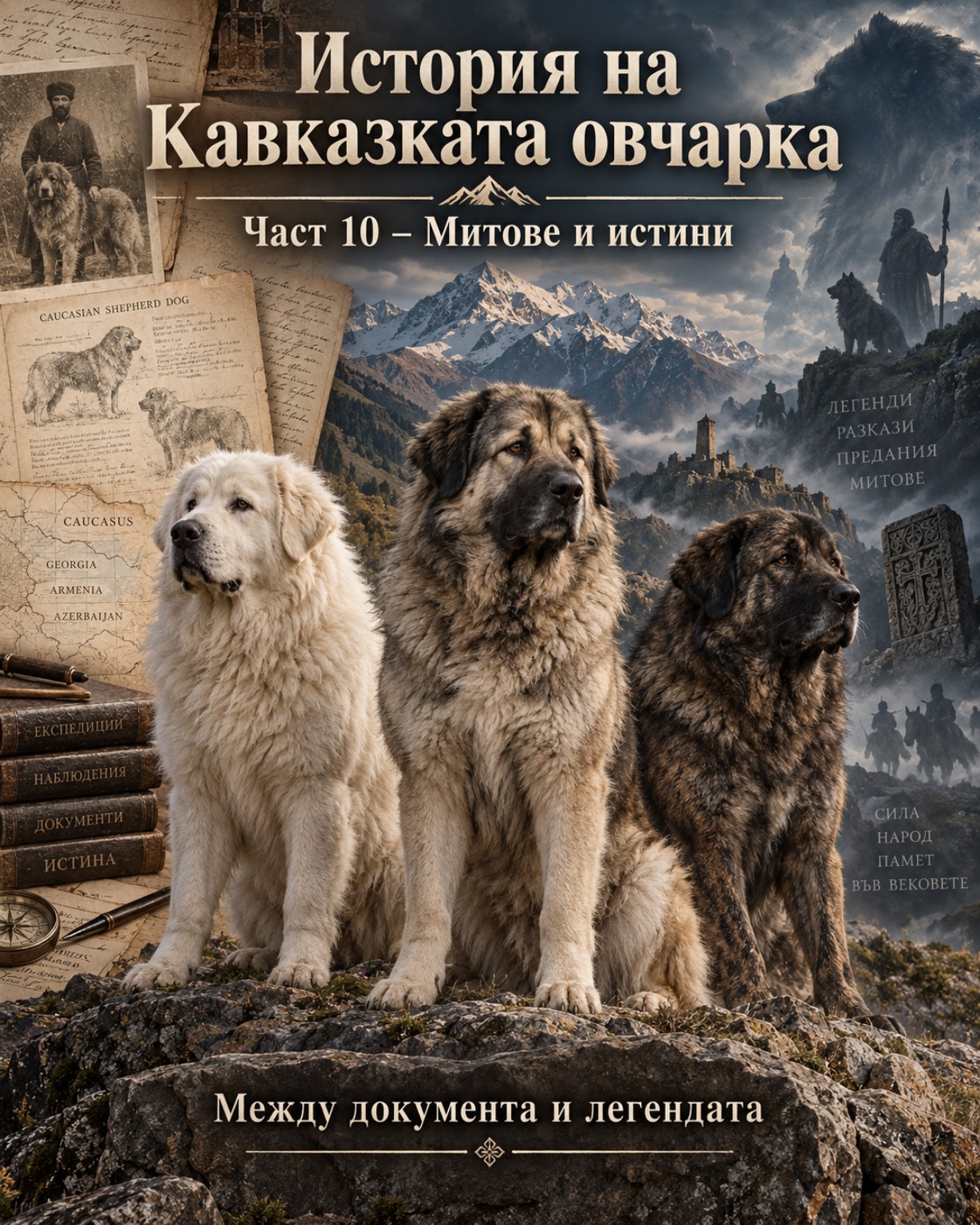
After so much history, it is time to separate the documents from the legends.
Few breeds are surrounded by as many categorical claims as the Caucasian Shepherd Dog.
‘A true Caucasian Shepherd must be enormous.’ ‘White dogs are the most ancient.’ ‘A good Caucasian must be aggressive.’ ‘Show dogs can no longer work.’ ‘Before breed standards, all Caucasian dogs were the same.’
Some of these ideas arose from real qualities of the dogs. Others were exaggerated over generations. And some have simply been repeated so often that they gradually began to sound like historical fact.
But history shows something more complex: the dogs of the Caucasus were shaped by geography, climate, work and local selection. They varied in size, coat, colour and type. Their value was not measured by exaggeration, but by whether they could do the work required of them.
Myth: A real Caucasian Shepherd must be huge. Truth: Historical working dogs needed strength and endurance, but excessive size was not the goal. Function, mobility and the ability to guard mattered more than spectacular dimensions.
Myth: White dogs are the oldest and therefore the only authentic type. Truth: White dogs have long existed in parts of the Caucasus, but historical descriptions and regional populations show a much broader range of colours. Colour alone cannot prove greater antiquity or authenticity.
Myth: A good Caucasian Shepherd must be aggressive. Truth: The traditional guardian needed courage, distrust of strangers and readiness to defend, but uncontrolled aggression was not an advantage. A dog that could not distinguish a real threat from ordinary life was difficult and dangerous to work with.
Myth: Show dogs cannot work. Truth: Exhibition selection can change appearance when it becomes the only breeding priority, but a show title does not automatically remove working instinct. The decisive factors are genetics, selection, temperament, upbringing and testing.
Myth: Before standards, all Caucasian dogs were the same. Truth: The opposite is closer to the historical picture. Before organized cynology, local populations differed from region to region. Standardization later brought those varied dogs under a common breed description.
The history of the Caucasian Shepherd Dog is not made stronger by myths. It is made stronger when we preserve what can be documented, clearly mark what is tradition or legend, and respect the remarkable working dogs that existed long before modern breed debates.


Comments